Commercial Solar · NY · NJ · CT

Your roof is a cash-flow asset. Start collecting.

The 30% federal ITC, MACRS depreciation, and energy + demand savings stack into a commercial solar investment that typically returns 20–25% a year and can pay for itself in less than five years — then runs positive for two decades.

5 MW+Commercial kW installed
In-houseDesign, install & service
NY · NJ · CTFully licensed & bonded
Typical commercial solar performance
20–25%
Annual cash-on-cash ROI
<5 yrs
Typical payback period
30%
Federal ITC — year one
20+ yrs
Cash-flow positive after payback
Representative figures — your custom proposal confirms the exact numbers.
The commercial energy problem

Two line items draining your P&L every month.

Commercial utility bills aren't just about how many kilowatt-hours you use. They split into two separate charges — and the one most businesses overlook is often the bigger one.

Energy charges (kWh) are what you pay for every unit of electricity consumed. Solar can offset the majority of these directly.

Demand charges (kW) are billed on your peak 15-minute draw for the month — regardless of how brief that spike was. For many commercial accounts, demand charges represent 30–50% of the total bill. Battery storage addresses these directly.

Both lines escalate every year. Neither one needs to stay on your income statement.

Typical commercial utility bill breakdown
Energy charges (kWh)~55%
Offset by solar production — directly reduces your kWh consumption charges.
Demand charges (kW)~35%
Driven by peak draw — reduced by battery storage shaving demand spikes.
Fixed & delivery charges~10%
Utility fixed costs — minimal, remains on the bill regardless.
Both variable lines — fully addressable ~90% of your bill
Cash Flow & ROI

The numbers,
laid out flat.

This is a representative pro-forma for a 200 kW commercial system. Your custom proposal will reflect your actual load profile, roof, utility rate, and tax situation. The structure of the return is the same.

Representative Pro-Forma
200 kW system · illustrative
Gross system cost$400,000
Federal ITC (30%)Applied year one against your tax liability− $120,000
Net cost after ITC$280,000
MACRS / Bonus depreciationApprox. tax value — depends on your tax rate− $86,000
Net effective investmentAfter ITC + depreciation$194,000
Annual energy savingskWh offset at current utility rate+ $38,000
Annual demand charge reductionPeak shaving via solar + battery+ $14,000
Total annual cash savings$52,000 / yr
Annual cash-on-cash ROI~27%
Simple payback~3.7 years
20-year net cash flow+ $850,000
Representative only. Actual ROI depends on system size, roof conditions, utility rate, and your business's tax situation. Consult your tax advisor regarding ITC and depreciation treatment.
Cumulative cash flow
Year 0–20 · representative 200 kW system
Cash flow Breakeven
The Cash-Flow Stack

Six levers.
One direction.

Every incentive and savings line below is a cash-flow driver. Together, they turn a capital expenditure into a compounding financial asset.

Reduces net cost
30%

Federal Investment Tax Credit

30% of gross system cost applied against your federal tax liability in year one. The single largest cash-flow lever — effectively cuts your investment by nearly a third immediately.

Tax cash back
MACRS

Bonus Depreciation

Commercial solar qualifies for MACRS depreciation with a 5-year schedule. Bonus depreciation (subject to current tax law) can accelerate a large portion of this into year one, generating significant additional tax cash flow.

Ongoing savings
~55%

Energy Savings (kWh)

Solar offsets the majority of your energy consumption charges — the largest variable line on your utility bill — from day one of operation.

Cuts peak charges
30–50%

Demand Charge Reduction

Battery storage shaves peak demand spikes, directly reducing your demand charge line. For high-load operations, this can be as impactful as the energy savings themselves.

Grid revenue
VDER

Net Metering / Value of DER

Excess production earns bill credits or VDER compensation from your utility. NY's VDER tariff allows commercial projects to capture additional value for the grid services your system provides.

Tax-side benefit
Varies

Property Tax Abatement

Commercial solar installations may qualify for local property tax abatements. NYC and several NJ and CT municipalities offer multi-year abatements that reduce the carrying cost of the asset.

i Tax incentives depend on your business's specific tax situation, entity structure, and filing status. Consult your tax advisor before making financial projections. State Solar provides documentation to support your advisor's analysis.
Financing

Two paths.
Both cash-flow positive.

We offer two financing structures. Cash maximizes total return. $0-down financing preserves capital while keeping you positive from day one. No PPA, no C-PACE, no complexity.

Option A

Cash Purchase

Best total ROI. Every incentive stays with you, unshared.

  • Maximum ROI — no financing cost diluting your return.
  • Full 30% ITC flows directly to your business's tax return.
  • Full MACRS / bonus depreciation applied against your taxable income.
  • ~3–5 year payback, then two decades of near-pure cash flow.
  • Adds real asset value to your property's balance sheet.
Option B

$0-Down Financing

Preserve capital. Structured so energy savings can cover the payment — cash-flow positive from day one.

  • No upfront capital — free up your balance sheet for core operations.
  • Structured for cash-flow neutrality — energy savings typically cover or exceed the payment from month one.
  • You keep the ITC and depreciation — incentives stay with your business.
  • Competitive fixed rates through our commercial financing partners.
  • No PPA, no C-PACE — straightforward commercial loan, nothing exotic.
Battery Storage & Demand Management

Cut demand charges. Keep the lights on.

For commercial accounts, demand charges often represent 30–50% of the total utility bill — and they're triggered by brief peak-load spikes, not sustained consumption. Battery storage addresses this directly.

A properly sized storage system shaves those peaks, drops your demand charge line, and pairs with your solar array to maximize the value of every kilowatt-hour you produce. For operations with critical loads — refrigeration, manufacturing lines, HVAC-heavy buildings — it also provides backup resilience when the grid can't.

30–50%
Demand charge reduction, typical commercial storage deployment
Available
Storage incentives & NYSERDA programs for commercial systems
— 01

Demand peak shaving

Discharge stored energy during peak-load windows to flatten your demand curve and reduce your highest monthly kW reading.

— 02

Solar self-consumption

Store midday solar production and deploy it in the evening rather than exporting at low grid rates — maximizes the value of every panel.

— 03

Backup & resilience

Critical loads — refrigeration, servers, manufacturing — keep running through grid outages. Designed into the system from day one, not bolted on.

— 04

Storage incentives

Commercial storage projects may qualify for additional NYSERDA incentives and utility demand response programs — stacked on top of the ITC and depreciation.

Industries we serve

High-bill operations
are our specialty.

Commercial solar pencils best when the underlying utility cost is significant. These are the property and business types where the cash-flow case is clearest — and where we have the most experience.

Warehouses & Light Industrial

Large, unshaded roof area — ideal solar footprint with significant lighting and HVAC loads to offset.

Self-Storage Facilities

High roof-to-load ratio. Security lighting, climate control, and office loads run year-round — consistent solar returns.

Car Washes

High-draw motors and HVAC create large demand spikes. Solar + storage can address both the energy and demand charge lines.

Breweries & Manufacturers

Energy-intensive operations with significant refrigeration and process heat loads. Strong solar ROI driven by high utility spend.

Greenhouses

Year-round electricity load for lighting, climate control, and irrigation. Solar ROI is among the strongest in any commercial category.

Private Schools

Institutional buyers with long time horizons. Solar pairs well with sustainability goals and multi-decade facility planning.

Houses of Worship

Often energy-intensive with large roof areas and tight operating budgets. Solar frees up funds for mission-critical spending.

Not listed here?

If your business has a significant utility bill, solar likely pencils. Let us run the numbers for your specific property.

Why State Solar

One company.
Everything handled.

We handle design, engineering, permitting, utility interconnection, construction, and post-install monitoring — all in-house. You manage one relationship — us — start to finish.

In-house EPC

Engineering, procurement, and construction under one roof. One point of contact from design through commissioning.

Commercial-scale engineering

In-house licensed engineers handle utility interconnection, load analysis, and structural assessments — no third-party hand-offs.

Dedicated project management

A single project manager owns your job from signed contract to PTO. You always know who to call — and they always pick up.

Post-install monitoring

System-level production monitoring from commissioning day forward. We catch underperformance before it costs you money.

Talk to a commercial solar engineer — not a call center. Your first conversation is with someone who has designed and built commercial systems.
Coverage Stack

You're covered. Full stop.

  • 25 yrsPanel manufacturer warranty — equipment and output guaranteed
  • 25 yrsInverter & racking — parts and labor covered
  • CoveredRoof-penetration leak protection — if a mount causes an issue, you're protected up to 25 years
  • BondedFully bonded, licensed, and insured — NY, NJ, and CT
The Process

Nine steps from
analysis to cash flow.

Commercial projects move through a defined workflow — no surprises, no hand-offs to outside crews. From your first call to system commissioning, here's exactly what happens.

— 01

Site Assessment

We inspect your roof, electrical infrastructure, and utility connection. No desk-top analysis — in person, on-site.

— 02

Load & Demand Analysis

We review 12 months of utility data to model your energy and demand profile accurately before designing anything.

— 03

Custom Engineering Design

In-house engineers produce a full system design: panel layout, inverter spec, racking, single-line diagrams, and structural calculations.

— 04

Cash Flow Proposal

You receive a full pro-forma: net cost after incentives, annual savings, ROI, payback, and 20-year cumulative cash flow — exact numbers for your project.

— 05

Financing

Cash or $0-down financing — we structure the deal and coordinate with financing partners if applicable. Contracts executed, ITC documentation prepared.

— 06

Permitting & Interconnection

We file all permits and handle utility interconnection application — one of the most time-consuming steps. We own it entirely.

— 07

Construction

Our crew installs the system. Commercial installs typically take 2–5 days depending on system size. Site is left clean.

— 08

Commissioning

Final inspection, utility sign-off, permission to operate. We commission the system and confirm production against design.

— 09

Monitoring & Ongoing

System-level monitoring from day one. Annual production reports, proactive service, and a dedicated contact for the life of the system.

Project results

Hard numbers from
real projects.

These are real project outcomes. Industry and size have been generalized; exact client details available on request. Real project data and photos to be added below.

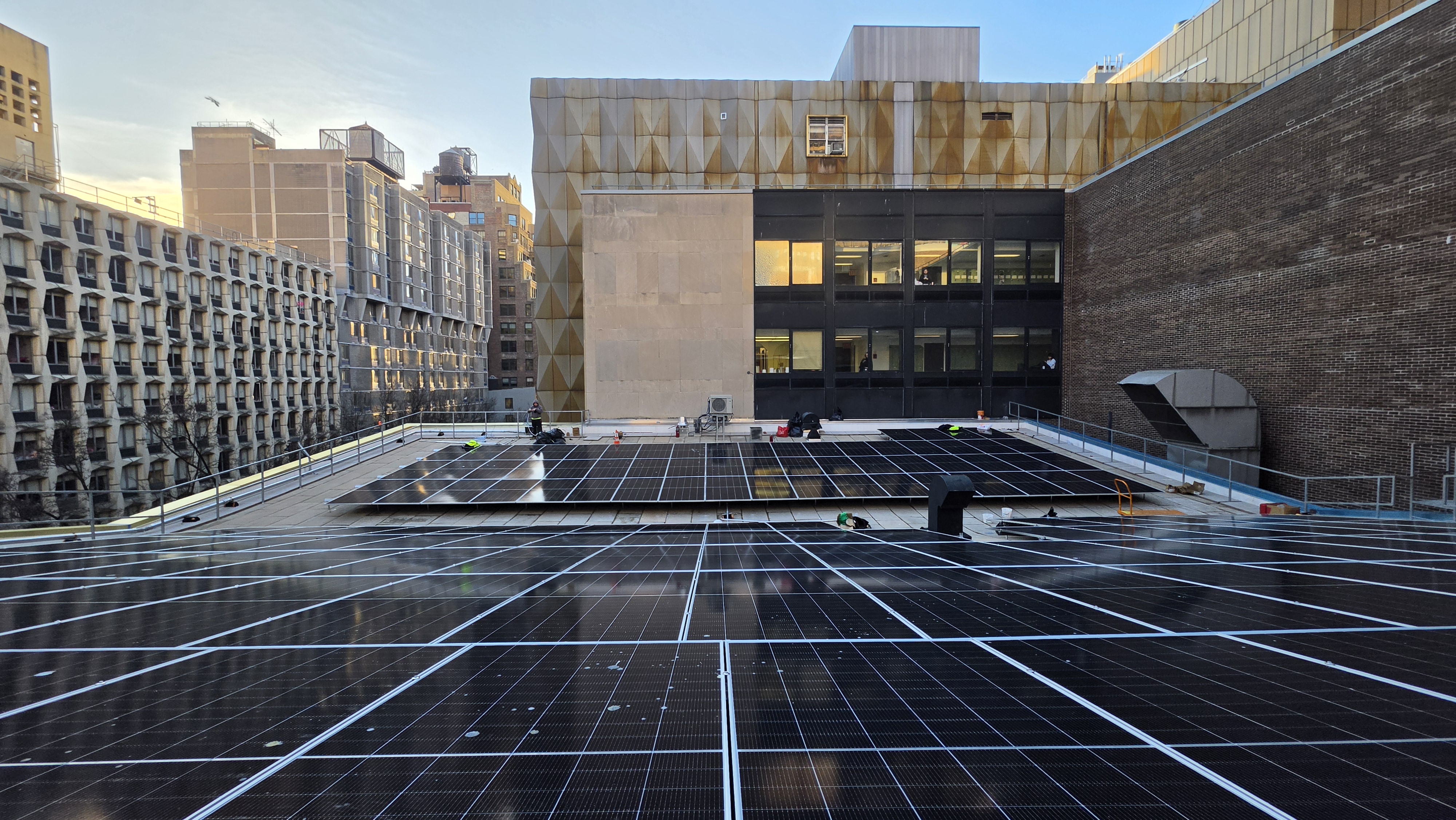
Fashion Institute of Technology — Manhattan, NY Higher Education · Manhattan, NY
Higher Education

Fashion Institute of Technology — Manhattan, NY

320 kWSystem DC
~24%Annual ROI
4.2 yrsPayback
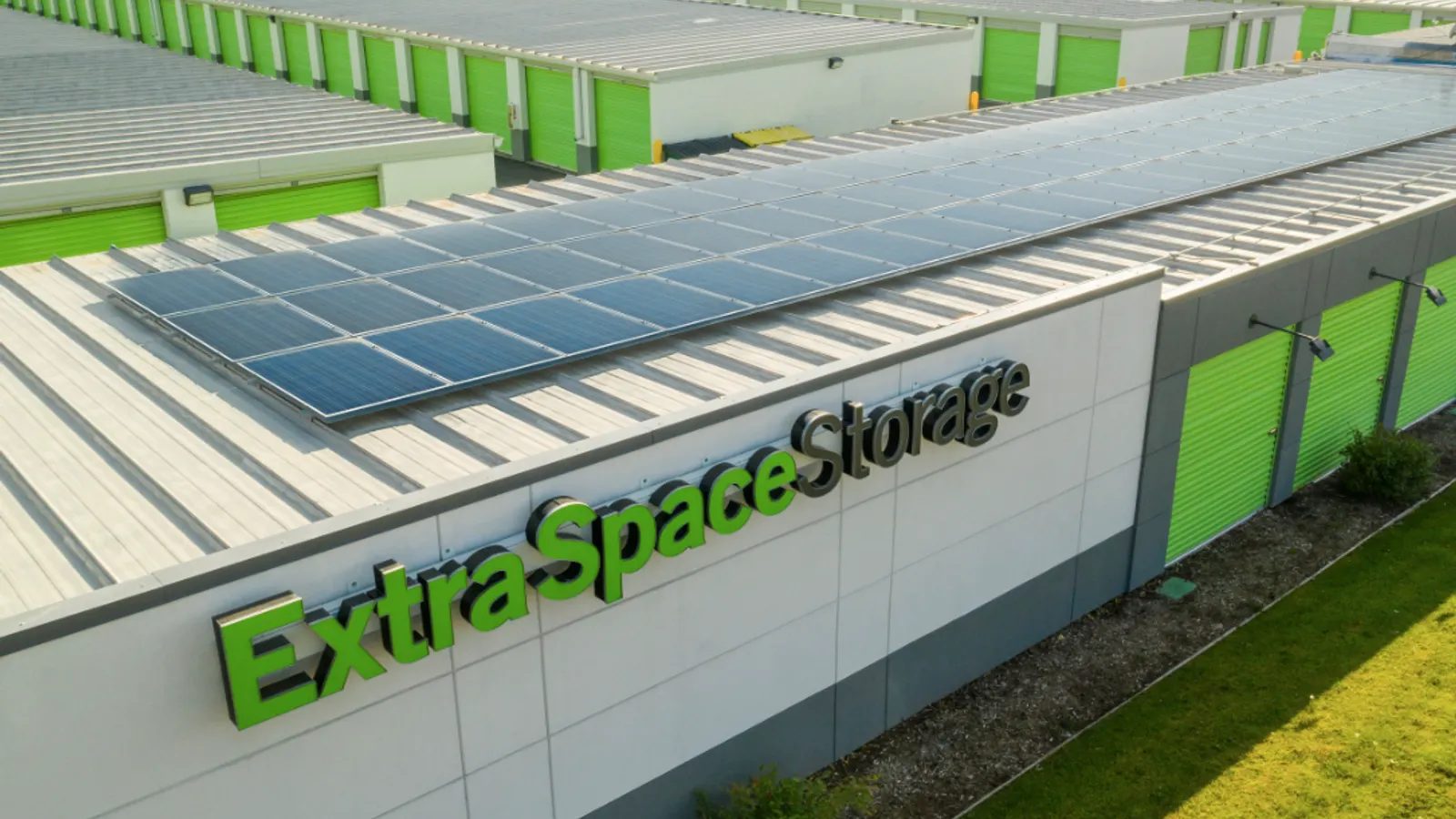
Self Storage Warehouse — New Jersey Self-Storage · NJ
Self-Storage & Warehouse

Self Storage — New Jersey

180 kWSystem DC
~27%Annual ROI
3.7 yrsPayback
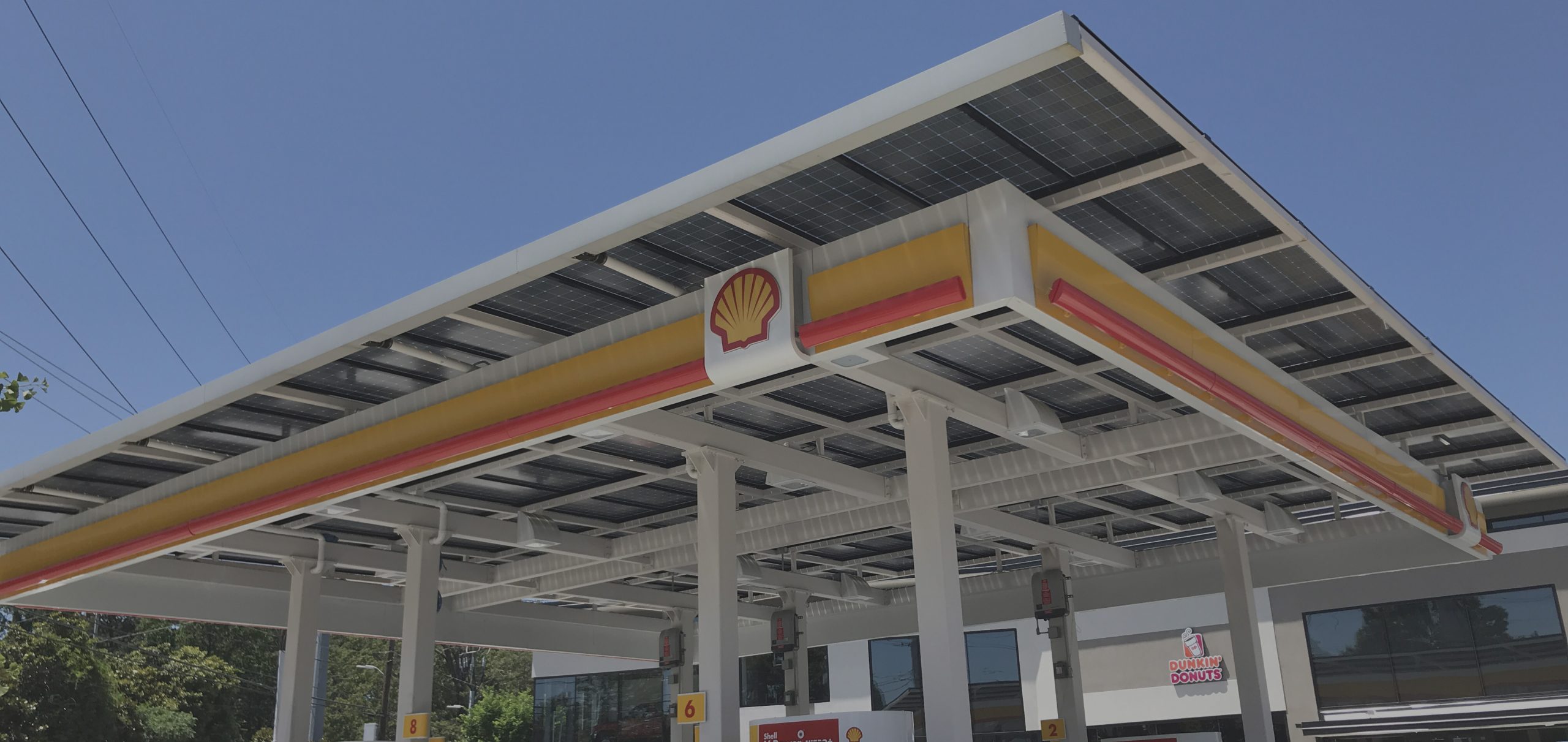
Shell Gas Station — New York Gas Station · NY
Fuel & Retail

Shell Gas Station — New York

240 kWSystem DC
~22%Annual ROI
4.6 yrsPayback
Commercial licenses · bonding · insurance · Tier-1 equipment & financing partners
Tesla EnergyBattery storage
SolarEdgeTier-1 inverters
NABCEPCertified installer
NYSERDAAuthorized · NY-Sun
BBB A+Accredited
CommercialBonded & insured
FAQ

Questions a CFO
would ask.

Straightforward answers on the financial and operational questions that matter for a commercial decision. Call (347) 502-6083 or email sales@statesolar.co for anything not covered here.

The ROI is calculated on your net effective investment — what you're actually in for after the 30% federal ITC and the tax value of MACRS depreciation. For a $400,000 system, the ITC brings you to $280,000, and first-year bonus depreciation may bring effective cost down to roughly $194,000. With $52,000 in annual energy and demand savings, that's approximately 27% cash-on-cash return. Your actual number depends on your system size, utility rate, load profile, and tax situation — which is exactly what our custom proposal models.
Cash delivers the highest total ROI because there's no financing cost reducing your return. If your cost of capital is low and you're sitting on cash with limited high-return deployment options, cash is almost always the right answer. $0-down financing makes sense when capital is better deployed in operations — the key is that we structure the financing so your energy savings are likely to cover or exceed the payment from day one, keeping you cash-flow neutral or positive immediately. We'll model both scenarios side by side in your proposal.
The 30% federal Investment Tax Credit reduces your federal income tax liability by 30% of the gross system cost in year one — it's a direct dollar-for-dollar credit, not a deduction. MACRS allows you to depreciate the asset over five years (or faster with bonus depreciation), generating additional taxable income reductions. The exact cash value of these depends on your effective tax rate and entity structure. We prepare a complete documentation package for your tax advisor — they do the filing; we make sure they have everything they need.
Generally, yes — to claim the ITC and depreciation, your business needs to own the system, which typically requires ownership or a long-term lease of the property. If you're a tenant with a long remaining lease term, there may be a path depending on the lease structure and landlord relationship. We assess this during the proposal process and will tell you clearly whether solar makes financial and structural sense for your situation.
We assess roof condition, remaining useful life, load capacity, and orientation during our site assessment. Most flat commercial roofs are well-suited for solar. If the roof needs work first, we can coordinate a roof replacement alongside the solar installation — sometimes the most cost-effective approach. We won't install on a roof that we believe is within 10 years of needing replacement without addressing it first.
Demand charges are billed on your peak 15-minute draw in a given billing period. Solar alone can reduce demand charges if your peak usage coincides with peak solar production. Battery storage addresses demand charges more directly — by storing energy and discharging it during high-draw windows, it flattens your demand curve regardless of cloud cover or time of day. A properly sized solar + storage system can reduce demand charges by 30–50% for many commercial operations.
Commercial interconnection takes longer than residential — typically 8–16 weeks depending on the utility, system size, and whether a grid impact study is required. Projects above certain capacity thresholds (typically 300 kW for some utilities) may require a full interconnection study, which adds time. We file the application on the day permits are pulled and manage the entire process. We build realistic interconnection timelines into every proposal so you're not surprised.
We design systems around your current load with an eye toward future expansion. If you anticipate significant load growth — additional equipment, EV charging, building expansion — we'll size the system accordingly or design conduit pathways for easy future expansion. A system designed today for a 30% load increase costs marginally more to install but avoids a full re-permit and interconnection process later.
Start the analysis

Request a Free Site Assessment

No boilerplate proposals. A commercial solar engineer reviews your load data, roof, and utility account and builds a project-specific pro-forma — ROI, payback, 20-year cash flow, and financing options. Call, email, or submit the form.

Project-specific pro-forma — not a template
ITC + depreciation documentation package included
No-obligation — you get the numbers before signing anything
(347) 502-6083 sales@statesolar.co

Request a Free Site Assessment

A commercial solar engineer follows up within one business day.

+
Attach utility bill or usage history PDF, JPG, PNG, XLS · up to 10 MB

🔒 Your information is never shared. Call or email us directly — we don't text.

Call now Get Analysis